Choosing durable dog leashes starts with understanding the materials available. The right material balances strength, comfort, and longevity based on your dog's size, walking habits, and environment. At furfamilymarket, we've curated leash options that prioritize durability without sacrificing comfort for handler or dog.
The three primary materials dominate the market: nylon, leather, and polyester webbing. Each offers distinct advantages and trade-offs. Your choice depends on your climate, your dog's behavior, and how much maintenance you're willing to invest.
Nylon: Affordability and Everyday Durability
Nylon is the most common leash material for good reason. It's affordable, lightweight, and resists moisture better than most alternatives. Single-ply nylon webbing works well for smaller dogs and casual walks, while double-ply construction adds durability for stronger pullers.
The real advantage of nylon leashes is their low cost and minimal care requirements. You can toss them in the wash and hang them to dry. They don't require conditioning like leather. For budget-conscious pet owners or those with multiple dogs, nylon offers reliable performance without breaking the bank.
A common mistake is assuming all nylon is equally durable. Width and ply count matter significantly. The American Society for Testing and Materials establishes standards for webbing strength that manufacturers follow, though consumer products rarely advertise these ratings directly.
The Jeffers 1-Ply Web Nylon Dog Leashes available at furfamilymarket demonstrate this affordability advantage at just $4.99. They feature nickel-plated bolt snaps and single-ply nylon webbing suitable for everyday walks with small to medium dogs.
Pro TipInspect nylon leashes monthly for fraying at the edges and stress points near the clip. Fraying spreads quickly once it starts and weakens the entire leash structure.
Leather: Strength and Longevity with Care
Leather leashes are stronger than nylon and age beautifully when maintained properly. High-quality leather develops character over time, becoming softer and more supple with use. The material naturally resists stretching, which appeals to owners of powerful dogs who pull hard.
The downside is clear: leather requires regular conditioning to prevent cracking and drying. It absorbs water, which can lead to mildew if not dried thoroughly. Leather also costs more upfront, though durability often justifies the investment for long-term users.
Flat leather leashes distribute pressure more evenly across your hand than round ones, reducing strain during walks with strong pullers. The Jeffers Flat Leather Dog Leash with Hand Strap Handle at furfamilymarket ($14.99) exemplifies this design. It features solid brass hardware and supple leather construction in a classic 6-foot length. The hand strap provides secondary control points useful for crossing busy streets or managing reactive dogs.
Jeffers Flat Leather Dog Leash with Hand Strap Handle, 6 Feet Long
Inspect this junction regularly for cracks or weakening.
Watch OutNever leave leather leashes in direct sunlight for extended periods. UV exposure accelerates drying and cracking, significantly shortening lifespan. Store in a cool, dry place away from windows.
Polyester and Webbing: Fade and Weather Resistance
Polyester webbing occupies the middle ground between nylon and leather. It resists fading better than nylon, making it ideal for dogs walked frequently in sunny climates. Polyester doesn't absorb water like leather, so it dries quickly after rain or water crossings.
The trade-off is that polyester works well for moderate-use situations.
Webbing width and thickness matter more with polyester than material choice alone. A 1.5-inch polyester webbing leash will outperform a 0.75-inch one significantly. Thicker webbing distributes force across a larger area, reducing stress on individual fibers.
Select the Right Dog Leash Length Guide
Leash length directly impacts control, safety, and your dog's freedom during walks. The standard 6-foot leash balances these factors for most situations. However, your specific needs may call for different lengths.
A 4-foot leash provides maximum control for urban environments, crossing streets, and managing dogs around other animals. This length keeps your dog close and prevents them from reaching sidewalk hazards or approaching unfamiliar dogs. It's ideal for training and reactive dogs.
A 6-foot leash offers versatility for suburban and rural walks. It allows moderate exploration while maintaining adequate control. Most training scenarios work well at this length, and it's long enough for casual park walks without being unwieldy.
A 10-foot or longer line serves specialized purposes: recall training, beach walks, or open field exploration where your dog can roam safely. These aren't everyday leashes but rather training tools for specific situations.
The BESTIA DOG SPORT GripPro Leash at furfamilymarket ($37.90) provides a balanced 5.9-foot length with heavy-duty nylon webbing and a soft-padded handle.
BESTIA DOG SPORT GripPro Leash
Key TakeawayMatch leash length to your walking environment, not just your dog's size. Urban walks need shorter control; open spaces allow longer leashes.
Evaluate Dog Leash Safety Features
Safety features separate reliable leashes from ones that fail when you need them most. Hardware quality, attachment security, and handle design all contribute to overall safety during walks.
Hardware and Attachment Points
The clip connecting your leash to your dog's collar or harness is a critical failure point. Cheap hardware fails without warning. Look for solid brass or stainless steel components rather than plated metals that corrode over time.
Bolt snaps are more secure than simple snap hooks. They require deliberate action to open, preventing accidental disconnection. Swivel snaps reduce tangling during walks, particularly useful for dogs that circle frequently.
The attachment point where the leash connects to the clip experiences the most stress. Inspect this junction monthly for separation, fraying, or loosening.
The BESTIA GripPro Leash includes a D-ring for attaching waste bag holders or emergency backup clips.
Handle Design and Control
A proper handle should fit comfortably in your hand without cutting off circulation. Padded handles reduce strain during long walks or when managing pulling dogs. The padding also improves grip in wet conditions.
Some leashes include secondary grab handles positioned closer to the dog. These provide emergency close control when crossing streets or encountering other dogs unexpectedly. This design element significantly improves safety in unpredictable situations.
Handle material matters for durability and comfort. Leather handles age well but require conditioning.
How to Inspect a Dog Leash for Wear
Regular inspection catches problems before they become dangerous. A systematic approach ensures you catch wear patterns early.
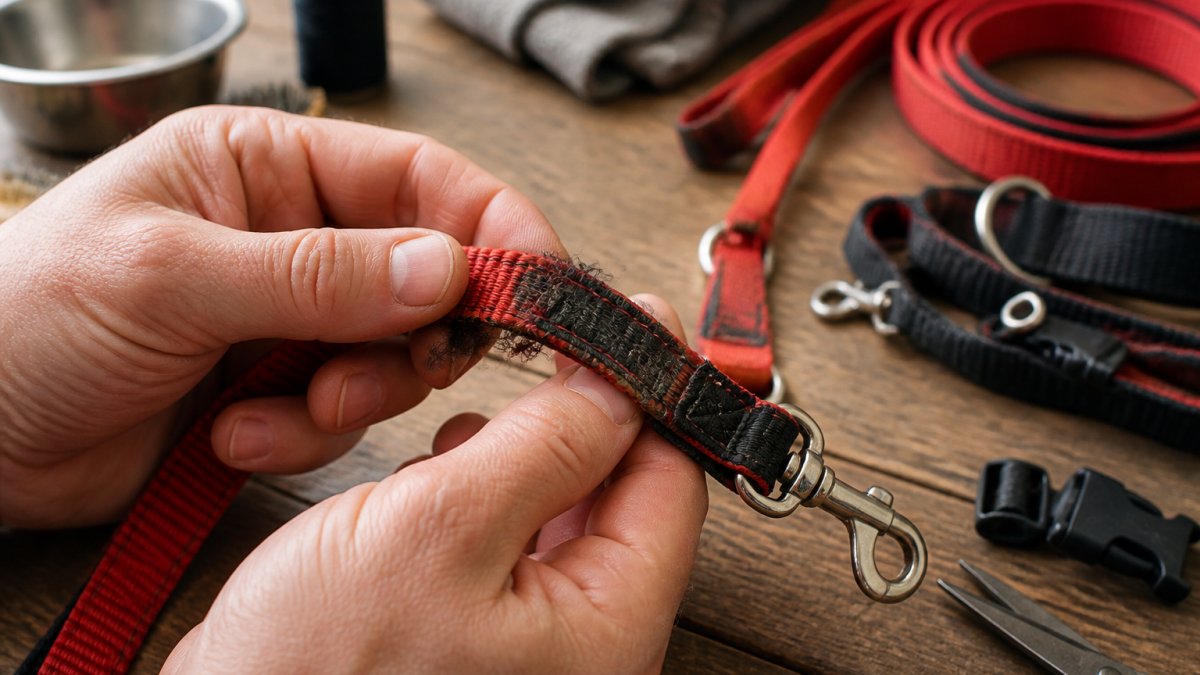
Close-up of hands examining a dog leash for fraying, stitching damage, and wear patterns on the webbing and attachment points
Start by running your fingers along the entire length of the webbing. Feel for soft spots, thin areas, or loose fibers. Fraying typically begins at edges and spreads inward.
Examine the stitching along both edges. Leashes rely on stitching to hold the webbing together under stress. Broken or loose stitches indicate the leash is approaching failure.
Inspect the attachment point where the leash connects to the clip. This stress point shows damage first.
Check the clip mechanism itself. Does it snap securely? Does it require excessive force to open? Does it feel loose or wobbly? A compromised clip fails suddenly under stress.
Examine the handle for cracks, padding deterioration, or loosening. A handle that's separating from the leash body indicates overall structural failure is likely.
Pro TipCreate a monthly inspection routine. Check your leash on the first of each month during a regular walk. This habit catches problems before they become dangerous.
Match Leash Construction to Your Dog's Size and Strength
A leash appropriate for a 15-pound Beagle will fail immediately with a 90-pound German Shepherd. Matching construction to your dog's size and strength is essential for safety.
Small dogs under 25 pounds can use standard 1-inch nylon webbing with single-ply construction. Their pulling force is manageable for most leash designs. A 6-foot standard leash provides adequate control.
Medium dogs between 25 and 60 pounds benefit from double-ply nylon or 1.5-inch webbing. Their pulling force increases significantly, and single-ply webbing may fray under sustained pressure. Leather becomes a viable option for this size range.
Large dogs over 60 pounds require heavy-duty construction. Double-ply nylon at 1.5 inches minimum, leather with reinforced stitching, or specialized no-pull designs become necessary. Standard leashes often fail with powerful pullers in this category.
A common mistake is choosing leash length based on your dog's size rather than their pulling behavior.
Care and Maintenance for Long-Lasting Leashes
Proper care extends leash lifespan dramatically. Different materials require different approaches.
Nylon leashes tolerate rough treatment well. Rinse with plain water after muddy walks and hang to dry. For deeper cleaning, wash with mild soap and warm water, then air dry completely. Machine washing can damage hardware and stitching, so avoid it.
Leather leashes demand more attention. Clean with a damp cloth after each walk, removing dirt and debris. Condition monthly with leather conditioner to prevent drying and cracking. This maintenance takes time but preserves the material's suppleness and strength.
Polyester webbing falls between these two. Rinse with water and air dry. Occasional mild soap cleaning works, but avoid harsh detergents that degrade the fibers.
Store leashes in a cool, dry location away from direct sunlight. UV exposure damages all materials but affects leather and nylon most severely. Coiling leashes loosely prevents kinks that weaken the material permanently.
Never leave leashes in hot cars or exposed to extreme temperatures. Heat accelerates material degradation and can damage hardware.
Key TakeawayThe most durable leash in the world fails without proper care. Five minutes of monthly maintenance extends leash life by years.
When to Replace Your Dog Leash
Knowing when to replace a leash prevents dangerous failures during walks. Several clear indicators signal replacement time.
Replace immediately if the clip fails to hold securely or opens unexpectedly. A compromised clip cannot be repaired safely. This is a non-negotiable safety issue.
Replace if you find more than three broken stitches in any 12-inch section or if stitching is separating from the webbing. Once stitching fails, the failure accelerates rapidly.
Replace if the webbing has thin spots where your fingers can nearly poke through, or if fraying covers more than 20% of the leash length. These leashes are approaching complete failure.
Replace if leather shows deep cracks that don't respond to conditioning, or if the material has become brittle and inflexible. Brittleness indicates the leather has dried beyond recovery.
Replace if the handle is deteriorating significantly or if padding has compressed to the point where it no longer provides cushioning. A failing handle increases hand strain and reduces control.
Conclusion
Choosing durable dog leashes requires understanding materials, construction quality, and your dog's specific needs. The best leash for your situation balances strength, comfort, and durability within your budget. At furfamilymarket, we've selected leashes like the Jeffers Flat Leather Dog Leash with Hand Strap Handle and the BESTIA DOG SPORT GripPro Leash because they combine quality construction, reliable hardware, and proven durability. Regular inspection and proper maintenance extend any leash's life significantly. Start with a material suited to your climate and dog's size, inspect monthly for wear, and replace when safety is compromised. Your dog's safety during walks depends on this foundation.
Jeffers 1-Ply Web Nylon Dog Leashes
Frequently Asked Questions
What material makes the most durable dog leash?
Durability depends on use and maintenance. Leather offers exceptional strength and longevity when cared for properly, with solid brass hardware adding lasting durability. Nylon provides reliable everyday durability at an affordable price point, resisting stretching and wear during regular walks. Polyester and webbing excel in outdoor conditions, resisting fading and water damage. The best choice matches your dog's size, walking style, and climate.
How do I choose the right durable dog leash for my dog's size and strength?
Match leash width and material thickness to your dog's pulling power. Small dogs under 25 lbs work well with single-ply nylon webbing, while medium to large dogs benefit from reinforced double-ply construction or leather. Heavy-duty nylon webbing and brass hardware handle strong pullers reliably. Inspect the leash regularly for signs of wear, especially at attachment points where stress concentrates during pulling or training.
How often should I inspect my dog leash for wear and when should I replace it?
Inspect your leash weekly for fraying, torn webbing, loose stitching, and corroded or bent hardware. Check the attachment point where the leash clips to the collar, as this experiences the most stress. Replace the leash immediately if you notice leather weakening, metal hardware failure, or significant stretching or tearing.
What leash hardware should I look for to ensure safety?
Choose solid brass or nickel-plated hardware rather than cheaper alternatives that corrode or fail under stress. The bolt snap or clip should lock securely and feel sturdy when engaged. Look for reinforced attachment points where the hardware connects to the webbing or leather, as weak stitching here is a common failure point. A secondary handle or D-ring near the clip provides extra control during walks.