Quick Comparison: Best Durable Leashes for Large Dogs
Finding durable leashes for large dogs means matching material, hardware, and length to your dog's weight and behaviour, not just picking the thickest option. At furfamilymarket, we curate walking gear for owners who treat their dogs as family, and these picks reflect what holds up on daily walks with big, strong breeds.
This guide breaks down what makes each one durable, where they fall short, and how to choose based on how your dog walks.
What Makes a Leash Durable Enough for a Large Dog
Durability in a large-dog leash comes down to three things: material strength, hardware quality, and how the leash handles force when your dog lunges. A leash rated for a 30-pound dog will not perform the same under a 120-pound dog that spots a squirrel.
Durable leashes resist wear at stress points: reinforced stitching, metal hardware instead of plastic, and webbing or leather thick enough to avoid fraying after months of daily use.
What most guides miss is that hardware fails more often than the leash body. A cheap bolt snap can bend or pop open under sudden force even if the webbing is fine. Look for solid brass, nickel-plated, or brushed steel clips, and inspect them regularly, the Jeffers leather leash uses solid brass for this reason.
Jeffers Flat Leather Dog Leash with Hand Strap Handle, 6 Feet Long
Watch OutNever rely on a worn or stretched clip. A snap that opens under a hard lunge can release your dog near traffic. Check the clip and stitching every few weeks, and replace the leash immediately if either shows weakness.
Strong Dog Leash for Dogs That Pull: What Actually Holds
A strong dog leash for dogs that pull must absorb force, not just resist it. Standard flat leashes transfer every jolt to your arm and your dog's neck, which is why pullers often stay pullers.
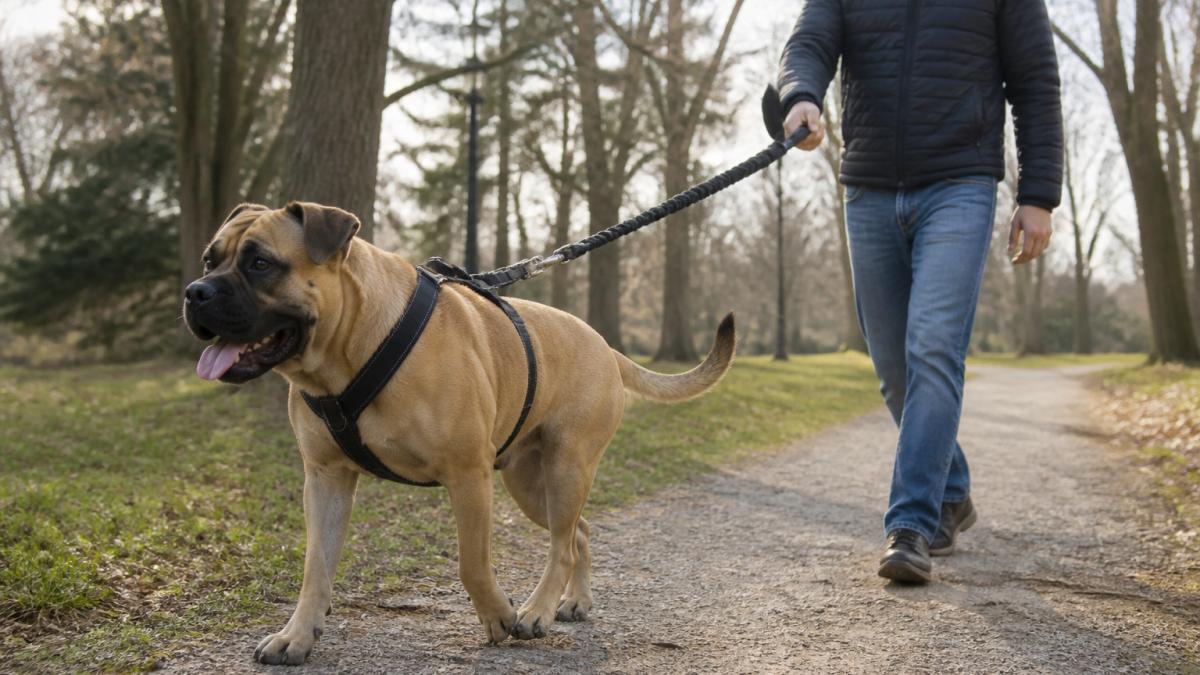
A large dog on a sturdy leash walking with its owner on a park path, with the owner holding the padded handle securely and the dog wearing a harness
The WUNDERleash takes a different approach. Its patented natural rubber core stretches from 4 to 7 feet, absorbing lunges and reducing pulling force by up to 50%, while a braided steel cable runs the full length inside so even a hard-charging dog cannot snap it. A secondary traffic handle near the clip gives instant close control at crosswalks or around other dogs.
For training walks, the BESTIA GripPro Leash pairs heavy-duty nylon webbing with a soft padded handle, which matters when a strong dog tests you for an hour straight, and its D-ring holds a bag holder or clicker without extra gear.
BESTIA DOG SPORT GripPro Leash
Pro TipIf your dog pulls mainly at the start of a walk, try a shorter resting length. A 4-foot leash gives you more use than a 6-foot one, and the stretch on a shock-absorbing lead still lets your dog sniff ahead.
Chew-Proof Leash for Large Dogs: Materials That Survive
No leash is truly chew-proof if a determined dog works at it unsupervised, but some materials discourage chewing far better. The goal is a chew-resistant leash that also reduces the frustration that makes dogs chew.
Natural rubber latex is one of the better options: dogs tend to resist its texture and taste, and the WUNDERleash uses 100% natural rubber latex for that reason. Nylon webbing, by contrast, frays at stress points and appeals to a bored chewer.
Leather sits in the middle. The Jeffers Flat Leather Leash is supple and sturdy, but leather weakens over time, and the manufacturer advises inspecting it regularly and replacing it if it softens or cracks.
For dogs that chew out of boredom, the real fix is often more exercise and a no-pull setup that stops the leash-frustration cycle, a calmer walk means less leash biting.
Best Leash Length for Large Dogs by Activity
The best leash length for large dogs depends on the activity, not a single universal number. A 6-foot leash is standard for everyday walks, while training and hiking call for different setups.
Here is how length maps to activity:
Sidewalks and busy streets: 4 feet or less for maximum close control
Everyday neighbourhood walks: 5 to 6 feet, the most common choice
Training and recall practice: 15 to 23 feet on a long line
Hiking and open trails: 6 feet, or a shock-absorbing lead that stretches
The Canny Long Training Line comes in 15 ft for smaller dogs and 23 ft for medium to large dogs, with a padded neoprene handle and two grab points to shorten it instantly, a genuine training tool, not just a long leash.
Retractable leashes are a different story: they reward pulling by paying out more line the harder your dog pulls, and their mechanical parts jam while thin cords can cause injuries. For a large dog, a fixed-length or shock-absorbing leash is safer.
Rope Dog Leash for Large Dogs: What to Know Before Buying
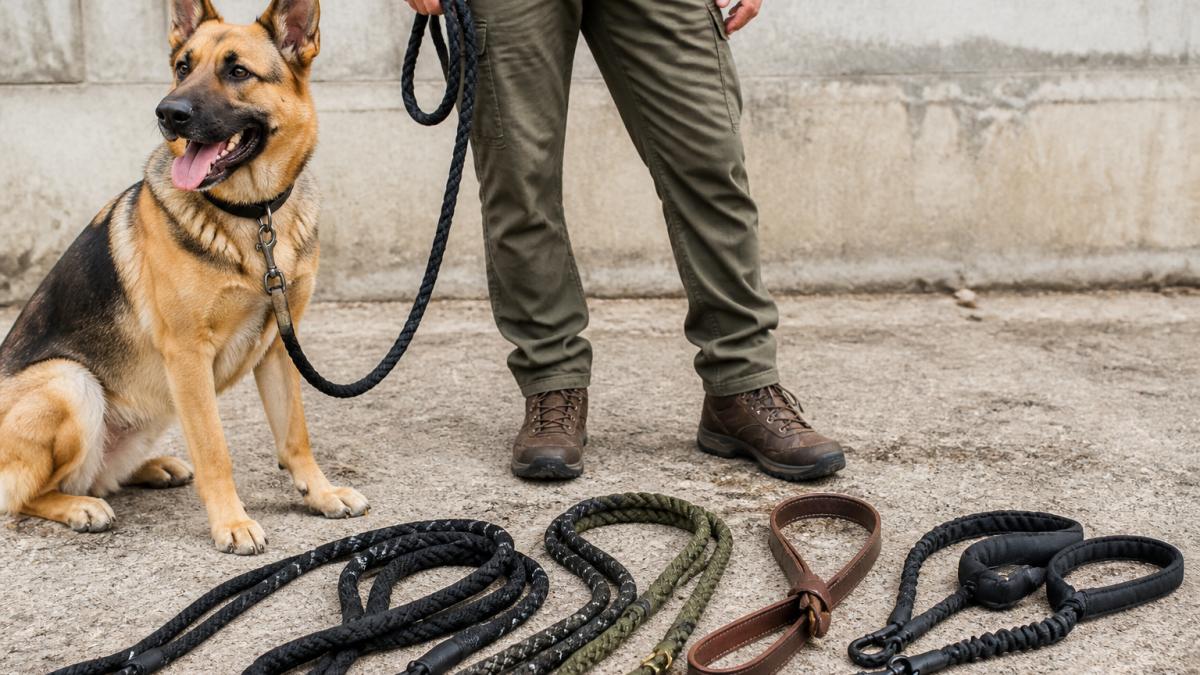
A rope dog leash for large dogs offers excellent strength and a comfortable grip, but rope has trade-offs.
Climbing rope and thick braided rope resist wear and handle wet conditions, though they are heavy and hold dirt, a 1/2-inch climbing rope leash weighs noticeably more than flat nylon of the same length, which matters with a dog that already pulls.
Nylon webbing is the more common alternative, used by the BESTIA GripPro Leash. It is lighter than rope, easy to clean with mild soap and warm water, and dries quickly, but flat webbing can fray at the clip over time, so reinforced stitching matters.
Leather remains the classic choice for a leash that softens with use and looks better as it ages, the Jeffers Flat Leather Leash in chestnut, with solid brass hardware, is a good example.
Chain leashes are the most chew-resistant option, but they are heavy, noisy, and can injure your dog or you if the chain whips during a lunge. Reserve them for dogs that have destroyed other leashes, and only under close supervision.
Whichever material you pick, match it to your dog's strength and climate: rope and nylon handle rain and mud well, leather needs care to stay supple, and chain is a last resort for extreme chewers.
Pro TipIf you walk in wet or muddy conditions, choose nylon or rubber over leather. If your dog chews, rope or chain will outlast nylon. No single material wins on every criterion, so prioritize the one weakness you cannot manage.
Hardware, Wear, and Warranty: What Lasts Long Term
Long-term durability lives or dies on hardware and maintenance, the two things most leash roundups skip. A leash is only as strong as its weakest clip, and even premium webbing wears out if you ignore the signs. Here is what actually fails, why, and how to inspect for it.
Clip types and load ratings. The most common hardware failure is the bolt snap or trigger snap bending or popping open under sudden force. Look for solid brass, nickel-plated steel, or brushed stainless steel; zinc alloy or plastic clips on budget leashes can fail well below a large dog's pulling force.
Corrosion resistance. Salt water, road salt, and mud accelerate corrosion. Stainless steel and brass resist best; nickel-plated steel is adequate for most climates but can pit over time. After wet or salty walks, rinse metal hardware with fresh water and dry it thoroughly, a corroded clip may look fine but can seize or weaken internally.
Stitching and webbing inspection. Check these points every few weeks:
Clip still closes fully and springs back firmly
Stitching at the handle and clip shows no fraying or loosening
Webbing or leather has no cracks, thinning, or stretched sections
Handle padding is intact and not compressed flat
D-rings and attachment points are not bent or corroded
Run your hand along the full length of the leash: any rough spot, soft section, or visible core in a rope leash signals wear, as do frayed strands or a stiff, flattened section indicating internal damage.
Warranty coverage. Warranty terms vary widely and often signal how much the maker trusts the product.
Repairability. Some leashes can be repaired: a frayed rope end can be re-spliced, or a worn clip replaced with a shackle or by a professional. Nylon webbing can sometimes be re-stitched, but once the webbing is compromised, replacement is safer. Leather can be conditioned to extend life, but cracked leather cannot be repaired reliably.
Key TakeawayThe most durable leash is the one matched to your dog's weight, walking style, and climate, then maintained. A well-cared-for $15 nylon leash can outlast a neglected premium one.
Conclusion
Choosing among durable leashes for large dogs means matching three things: your dog's pulling strength, your walking routine, and the hardware that keeps everything connected. Get those right and a good leash lasts for years.
Jeffers 1-Ply Web Nylon Dog Leashes
At furfamilymarket, we stock walking gear chosen by people who love pets, from the shock-absorbing WUNDERleash to the classic Jeffers leather leash and the Canny long training line, all shipping fast to your door so you can upgrade your walks without the guesswork.
Search our collection to find the leash that fits your dog's size, strength, and daily adventures.
Frequently Asked Questions
What is the strongest leash for a large dog?
The strongest options combine reinforced materials with secure hardware. Leather leashes with solid brass hardware, like the Jeffers Flat Leather Leash, resist stretching and breaking under load. Nylon webbing leashes with nickel-plated bolt snaps, such as the BESTIA GripPro, also hold up well for large breeds. For dogs that lunge, a shock-absorbing design with an internal steel cable, like the WUNDERleash, adds a safety layer that standard leashes lack. Match the leash's weight rating to your dog's size and pulling style.
What leash length is best for walking a large dog?
Most trainers recommend a 4 to 6 foot leash for daily walks with large dogs. This range gives enough room for sniffing and movement while keeping the dog close enough to control in traffic or around other animals. A 6 foot leather leash like the Jeffers Flat Leather model works well for neighborhood walks. For training recall or giving more freedom in open fields, a long line such as the Canny Long Training Line, available in 23 ft for medium to large dogs, is a better fit.
Are chain leashes a good choice for large dogs that chew?
Chain leashes resist chewing better than fabric or leather, but they are heavy and can injure a dog's teeth or gums if the dog lunges hard. For large dogs that chew, a better approach is a durable material paired with training to reduce leash frustration. The WUNDERleash uses natural rubber latex, which dogs tend to resist chewing because of its texture and taste. No leash is indestructible, so supervise any dog that chews regularly.
What features should I look for in a leash for a dog that pulls?
Look for shock absorption, secure hardware, and a comfortable handle. The WUNDERleash reduces pulling force by up to 50% through its stretch design and includes a secondary traffic handle for close control. A padded handle, like the one on the BESTIA GripPro Leash, prevents hand strain during long sessions. Check that the clip is rated for your dog's weight, and consider a harness with a front attachment point to redirect pulling without stressing your dog's neck.
How long should a durable leash last for a large dog?
A well-made leash for a large dog should last two to three years of daily use with proper care. Leather leashes need regular conditioning and should be inspected for cracks or weakening. Nylon webbing leashes last longer if rinsed and air-dried after muddy walks. The WUNDERleash, made from UV-resistant natural rubber, is designed for long-term use. Replace any leash immediately if you see fraying, rusted hardware, or stretched material.