The safest dog bed is built around your dog's size, sleep style, and habits, not marketing photos.
HuggleFleece® Mat Cat & Dog Bed
Here's the short version before you shop:
Curlers need raised edges to lean against.
Stretchers need a flat, roomy surface.
Chewers need hidden seams and no loose stuffing.
Most guides start with fabric swatches. That's backwards. A bed that ignores your dog's habits fails in weeks, no matter how soft it feels in the store.
Once you know what to look for, choosing safe dog bedding takes about ten minutes. Below: materials, sizing, durability, cleaning, and a safety checklist.
Best Dog Bed Materials: What's Safe and What to Avoid
Safe dog bedding materials are breathable, non-toxic, and sturdy enough for daily use. The right choice depends on your dog's chewing habits, the climate, and how often you'll wash the bed.
Natural Fabrics That Breathe
Natural fabrics let air move through the bed, keeping dogs comfortable in warm weather.
Cotton is soft, breathable, and easy to wash.
Canvas is tough and holds up to scratching and digging.
Corduroy adds warmth and hides dirt well.
A heavy, non-breathable cover is a common mistake for dogs that run hot. If your dog sprawls on tile in summer, pick cotton or canvas over thick plush. Breathability is a safety issue: a dog that can't shed heat through the bed surface is more likely to overheat, especially flat-faced breeds and seniors.
Synthetic Fabrics and Foam: What to Check
Synthetic materials aren't automatically unsafe, but quality varies. Check foam density and the cover's waterproof layer before buying.
Memory foam should feel dense and spring back slowly.
Polyester fill should be packed tight, not lumpy.
Waterproof liners help with accidents and incontinence.
Chemical Safety: What's Actually in the Bed
A dog bed is a soft furnishing, and soft furnishings can carry manufacturing residues: foam blowing agents, dye fixatives, stain and water repellents, adhesives, and sometimes flame retardants.
Certifications worth recognizing. Third-party certifications exist because self-declared "non-toxic" claims are unregulated. A certification means an independent lab tested for restricted substances. Look for:
OEKO-TEX Standard 100, tests finished textiles for harmful substances; the product class matters (baby/child classes are stricter than adult classes).
CertiPUR-US, applies specifically to polyurethane foam and covers emissions, heavy metals, and phthalates.
GREENGUARD Gold, focuses on low chemical emissions from the finished product, relevant for indoor air quality.
No certification isn't automatically a red flag, but it means relying on the brand's word.
Flame retardants. Some foam products are treated with flame retardants to meet flammability rules, and many pet owners prefer to avoid them.
Dyes and coatings. Dark, saturated dyes and "stain-resistant" or "water-repellent" finishes are the likeliest places for chemical residues.
Adhesives and hidden layers. Cheap beds often glue foam layers together.
Watch OutLoose stuffing is a real hazard. Dogs that chew can pull out foam chunks or fiberfill and swallow them, which can cause choking or a blockage. If your dog is a chewer, choose a bed with hidden seams and no exposed filling, and check the bed weekly for new tears, because a small rip becomes an ingestion risk fast.
Key TakeawayMaterial safety comes down to three checks: a recognized certification (or a manufacturer willing to answer questions), no lingering chemical odor, and construction that keeps filling where it belongs. If a bed fails any of those, keep looking.
Matching Material to Your Dog
Once safety basics are covered, match material to behavior:
Chewers: dense, stuffing-free mats with hidden seams.
Diggers and scratchers: flat, tightly woven canvas or heavy cotton that won't bunch.
Hot sleepers: cotton or canvas covers over breathable foam.
The safest material is the one your dog won't destroy, won't overheat on, and won't react to. When in doubt, choose simpler: fewer coatings, dyes, and glued layers, and a removable, washable cover.
Dog Bed Size Guide: Safe Sizing and Accessibility
The right bed size lets your dog lie flat on their side with room to spare, usually about 10 to 15 cm longer than their body. Too small forces awkward positions and joint pressure.
Measure your dog lying down, not standing. Use a soft tape measure from nose to tail base, then add room for stretching.
Nose to tail base: the minimum bed length.
Shoulder width: the minimum bed width.
Add 10 to 15 cm: so your dog can sprawl.
If your dog curls, a bed close to their body length works; if they stretch out flat, go bigger.
Dog Weight
Typical Bed Size
Best Sleep Style
Up to 11 kg
Small, 60-70 cm
Curlers and small breeds
11-27 kg
Medium, 75-90 cm
Side sleepers
27 kg and up
Large, 95 cm+
Stretchers and large breeds
Accessibility matters as much as size for seniors. A low front edge is easier to step into than a deep, high-walled bed, and raised edges should support the head without blocking entry.
Durable Dog Beds for Chewers: Construction That Holds Up
Durable dog beds for chewers rely on construction, not just fabric strength. Hidden seams, tight stitching, and stuffing-free designs outlast thick covers with exposed zippers.
Look for these features:
Hidden or recessed seams that are hard to grip with teeth.
No loose stuffing that can be pulled out.
Reinforced stitching along edges and corners.
Our HuggleFleece® Mat Cat & Dog Bed is a good example: crafted from dense, synthetic lambswool, these mats provide unparalleled softness while cushioning joints and regulating body temperature, ensuring your dog's comfort in any setting.
Diggers and scratchers need a different fix: they push fabric around before lying down, so a flat, dense mat that holds its shape beats a puffy bed that bunches up.
Pro TipIf your dog destroys beds within days, place a chew-resistant mat inside a sturdy frame or crate tray. You get the comfort of soft bedding without giving your dog a loose edge to attack.
Washable Dog Bed Covers: Cleaning, Allergens, and Hygiene
Washable dog bed covers are the most important feature for long-term hygiene. Dander, dust mites, dirt, and flea eggs build up fast, and a cover you can't remove turns a bed into an allergen trap. But "washable" only helps if you wash it correctly, the wrong temperature, detergent, or drying method can leave allergens behind or ruin the bed.
What to Look For Before You Buy
A removable cover with a hidden zipper makes cleaning simple. Check these points before buying:
Machine washable on a normal cycle, with care instructions printed on a tag.
Removable cover with a protected zipper (a zipper pull that can't be chewed off).
Quick-drying fabric so the bed isn't out of use for days.
Some beds skip the removable cover and are fully washable instead. Our Jeffers Pet Washable Comfy Dog Pillow is designed with a soft poly/cotton shell and filled with 600 gm poly fiber-fill insulation, providing a plush and supportive resting spot. It is completely washable for easy maintenance, ensuring a fresh and clean bed for your furry friend.
Jeffers Pet Washable Comfy Dog Pillow for Crates, Carriers, or Lounging
How Often to Clean
There's no single right interval, but these are reasonable defaults:
Every 1-2 weeks: covers for dogs that shed heavily, drool, or sleep on the bed daily.
Every 2-4 weeks: covers for average, healthy adult dogs.
Immediately: after accidents, vomiting, diarrhea, flea treatment, or any illness.
If your dog or anyone in the home has allergies, lean toward the shorter end of every range. Allergen buildup is cumulative, a cover that's "fine" at two weeks is noticeably worse at four.
Washing Without Damaging the Bed or Leaving Residue
Water temperature. Hot water kills dust mites and most bacteria, but it can shrink cotton, break down foam, and warp waterproof liners.
Detergent choice. Use a pet-safe, fragrance-free detergent.
Don't overload the machine. A stuffed bed cover needs room to move.
Drying matters as much as washing. Damp foam and thick fill grow mildew and mold, and mold spores are a respiratory hazard.
Watch OutNever put a damp or partially dry foam insert back inside a cover. Trapped moisture creates a mold-friendly environment right under your dog, and the smell won't be obvious until the mold has spread. When in doubt, wait another day.
Allergens, Pests, and Odor
Dust mites. These microscopic mites feed on shed skin cells and thrive in warm, humid fabric.
Fleas and their eggs. Flea eggs and larvae settle deep in bedding.
Dander and saliva. These proteins trigger most pet allergies in humans. Removable covers that wash clean are the practical fix; no coating or spray substitutes for regular washing.
Odor. Persistent odor usually means the insert, not the cover, is the source.
A Simple Cleaning Routine
Shake out the bed outdoors to remove hair and loose dirt.
Remove the cover and check the insert for stains, dampness, or chew damage.
Wash the cover per the tag, with pet-safe detergent and no softener.
Spot-clean the insert with a damp cloth and mild soap; hand-wash if the tag allows.
Dry completely, cover and insert, before reassembly.
Vacuum the frame or crate tray and check for loose threads, chewed edges, or exposed filling.
Reassemble and put the bed back.
That last step is a safety check too. Washing is when you're most likely to spot a failing seam, zipper, or escaping stuffing, all ingestion hazards for chewers. A clean but falling-apart bed isn't safe.
Key TakeawayWash covers every 1-4 weeks depending on your dog, use hot water only when the tag allows, skip fabric softener, and dry everything completely before reuse. Cleaning is also your best chance to catch wear that turns into a choking or blockage hazard.
Safety Checklist: Inspect Before You Buy
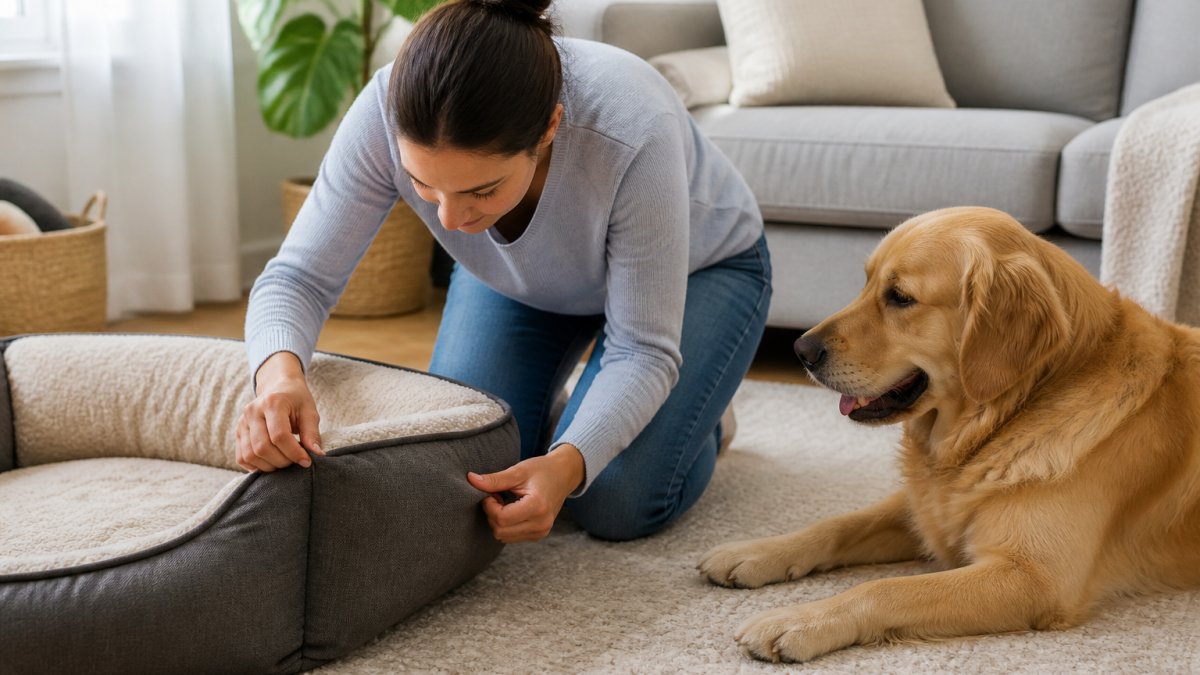
A pet owner kneeling beside a dog bed in a bright living room, closely inspecting the seams and fabric with both hands while a golden retriever watches nearby
Run this checklist on any bed before it comes home. It takes two minutes and catches most problems.
No chemical smell out of the packaging
Hidden or reinforced seams with no loose threads
No exposed stuffing or foam chunks
A quick note on placement: keep beds away from radiators, space heaters, and direct sun through glass. Dogs that overheat can't cool down quickly, and airflow around the bed matters as much as the fabric.
Common Mistakes When Choosing Safe Dog Bedding
The biggest mistake is buying for looks instead of behavior. A bed that matches your sofa but ignores your dog's chewing habit won't last a month.
Watch for these traps:
Sizing down to save space. A cramped bed causes joint strain.
Ignoring the cover. Non-removable covers get dirty fast.
Choosing thick plush for hot dogs. Overheating is a real risk.
Age changes the rules too. Puppies chew everything, so supervise until the habit fades. Seniors need low, firm beds that are easy to step into.
The throughline: safety comes from matching the bed to the dog in front of you, not the dog in the product photo.
Frequently Asked Questions
What materials are safest for dog bedding?
Look for breathable natural fabrics like cotton or canvas, or synthetic fleece with hidden, reinforced seams. Foam should be dense enough to support joints without collapsing. Avoid beds with strong chemical odors, loose stuffing, or small decorative pieces that can be chewed off and swallowed. A removable, washable cover also helps control allergens and keeps the sleeping surface hygienic over time.
How do I choose the right bed size for my dog?
Measure your dog from nose to tail and add 15-20 cm so they can stretch out fully. For curl sleepers, a bed slightly larger than their curled body works well. For stretchers, choose a bed at least as long as their full body length. A dog bed size guide helps here: too small restricts movement and can cause joint pressure, while too large can reduce the sense of security some dogs need.
How often should you wash dog bedding?
Wash bedding at least every two weeks, and weekly if your dog sheds heavily, has allergies, or is prone to accidents. Removable covers make this easier. Use a pet-safe, fragrance-free detergent and dry thoroughly before returning the bed. Regular washing reduces allergens, bacteria, and odor, and it also lets you inspect seams and filling for wear or damage that could become a hazard.
What should I avoid when choosing dog bedding?
Avoid beds with strong chemical smells, loose or exposed stuffing, small detachable parts, and seams that pull apart easily. Skip beds that are too small for your dog to lie flat, and be cautious with very soft, unstructured cushions for senior dogs that need joint support. Also avoid covers that cannot be removed and washed, since hygiene directly affects your dog's skin and respiratory health.
Choosing safe dog bedding comes down to a few clear checks: the right size, breathable materials, sturdy construction, and a cover you can actually wash. That's the standard we hold every product to at furfamilymarket. Our curated picks, like the Snoozy Dream orthopedic bed with its removable washable cover and the stuffing-free HuggleFleece® Mat, are chosen by pet lovers for comfort, security, and everyday durability. Get started with furfamilymarket and give your dog bedding you can trust.